

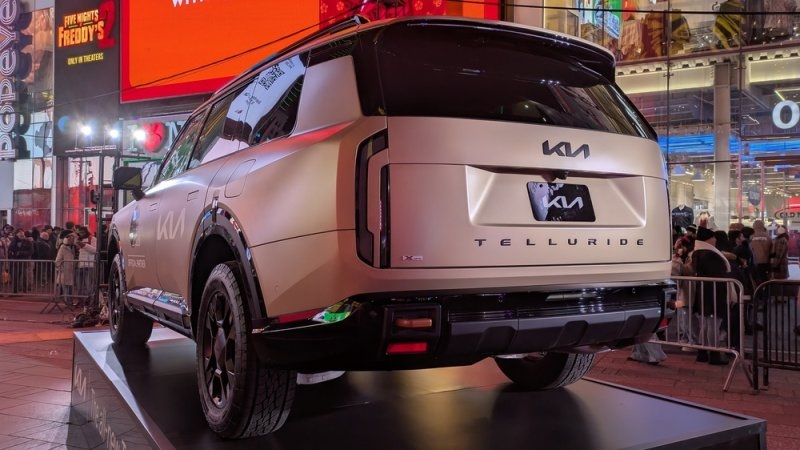
The three-row SUV market gets more crowded every year, but the Telluride keeps finding ways to stand out. It built its name on comfort, space, value, and being easy for families to live with. Now, Kia’s taken a real leap—they didn’t just tweak a few things here and there. This is a ground-up redesign, with a brand-new hybrid powertrain, better passenger space, more advanced features, and fuel economy that’ll make families think twice about what they’re driving.
We’re going to break down everything you need to know: the price, specs, release date, performance, design changes, tech features, and whether this SUV is actually worth holding out for.
The new Kia Telluride Hybrid is more than a powertrain update. It represents the second generation of Kia's flagship SUV, bringing meaningful improvements instead of small cosmetic changes.
Unlike the outgoing gasoline-only model, the Kia Telluride Hybrid combines a 2.5-liter turbocharged four-cylinder engine with dual electric motors. Together they generate 329 horsepower plus 339 lb-ft of torque while delivering better efficiency dramatically.
| Feature | Previous Telluride | 2027 Kia Telluride Hybrid |
|---|---|---|
| Powertrain | V6 Gas Engine | 2.5L Turbo Hybrid |
| Horsepower | 291 hp | 329 hp |
| Torque | 262 lb-ft | 339 lb-ft |
| Fuel Economy | Around 22 MPG Combined | 31-35 MPG Estimated |
| Driving Range | Approx. 430 miles | Around 600 miles |
| Transmission | 8-Speed Automatic | 6-Speed Automatic |
The 2027 Kia Telluride isn't chasing sports SUVs. It targets families who spend hours commuting, traveling, hauling luggage, or driving children between activities.
Extra efficiency changes daily ownership more than most buyers expect. Filling up less often saves both money and time. That matters. The larger dimensions also improve second-row plus third-row comfort, making the SUV better suited for long trips.
The biggest headline for the 2027 Kia Telluride is undoubtedly its first hybrid system. Instead of simply replacing the existing V6, Kia developed a setup combining a turbocharged 2.5-liter engine with dual motors for an electric car.
Power delivery should feel smoother during city driving, highway merging, plus passing slower traffic. The new six-speed automatic transmission also replaces the previous eight-speed gearbox, helping optimize hybrid efficiency.
Fuel economy has become one of the strongest selling points. Current estimates place Kia Telluride Hybrid MPG between 31 MPG combined for all-wheel-drive models and roughly 35 MPG for front-wheel-drive versions.
That represents a substantial improvement over the outgoing model. For families covering thousands of highway miles each year, Kia Telluride Hybrid MPG could easily become the deciding factor.
The Kia Telluride redesign goes beyond appearance. The wheelbase grows by 2.7 inches while the overall length increases by 2.3 inches. Those changes create noticeable gains in second-row legroom plus easier third-row access.
Inside, the cabin adopts a cleaner layout inspired by newer Kia models.
One glance explains where the inspiration came from. The Kia Telluride redesign introduces sharper lighting, stronger body lines, larger wheel arches, plus available X-Line and X-Pro trims for buyers wanting a tougher appearance.
It still looks unmistakably like a Telluride. Only more modern.
Technology finally catches up with the premium cabin.
Highlights include:
The AI assistant deserves attention because it can manage navigation, cabin settings, plus trip planning through natural voice commands, making everyday driving noticeably easier.
A complete Kia Telluride Hybrid review will have to wait until production models reach journalists, but the specifications already paint a promising picture.
The hybrid car system appears well-balanced. Instead of chasing maximum power, Kia focused on usable performance, stronger efficiency, plus family practicality. That's probably the smarter decision.
Looking strictly at numbers, the SUV improves where most families actually benefit. Higher fuel economy reduces running costs. More car interior space increases comfort. Updated technology simplifies longer trips.
Although an official Kia Telluride first drive has not yet taken place, expectations are high based on the mechanical changes. The additional torque from the electric motors should improve low-speed acceleration while creating smoother city driving compared with the outgoing gasoline model.
The upcoming Kia Telluride first drive will likely highlight refinement before outright performance. Hybrid systems usually shine in daily traffic, where instant electric torque makes the SUV feel lighter than its size suggests.
Switching to the hybrid is probably the biggest change the Telluride’s ever seen. Instead of sticking with minor upgrades, Kia has completely re-imagined this SUV. Passengers get a little more room to stretch out, the tech is seriously upgraded, and you spend way less time worrying about stopping for gas.
No. The Kia Telluride Hybrid is a conventional hybrid, not a plug-in hybrid. The battery charges automatically through regenerative braking and the gasoline engine, so there is no need to plug it into a charger.
Based on the redesigned platform, cargo space is expected to remain highly competitive. Kia has designed the hybrid system to minimize the impact on passenger and luggage capacity, making it practical for everyday family use.
Definitely, with 31-35 mpg and a range of nearly 600 miles, you won’t need to stop for gas nearly as often as you would in the old gasoline model. That’s a big win for highway drives.
Yes, there’s both front-wheel drive and all-wheel drive. AWD will use a little more fuel, but it’s great for bad weather and the occasional adventure off pavement.
If you’re after better fuel economy, stronger performance, smarter tech, and a fresh new look, it’s hard not to be tempted. Kia’s made real, meaningful upgrades here—not just cosmetic tweaks—which means you get a lot more bang for your buck in the long run.
This content was created by AI